
Global game for Cuffs and Collars. The phase-out of the WTO Agreement on Textiles and Clothing aggravates social divisions
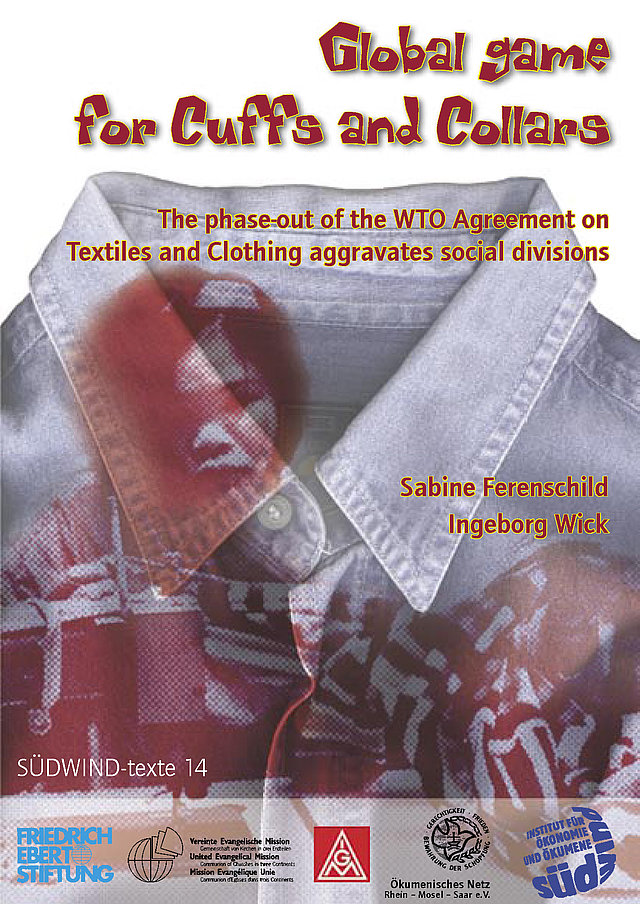
At the end of 2004, the Agreement on Textiles and Clothing of the World Trade Organisation (WTO) will be phased out. As from the beginning of 2005, the quota regime, which has characterised the world trade in textiles and clothing in recent decades, will disappear. Textile and clothing exports of developing and Eastern European countries to industrialised countries will then no longer be subject to quantitative restrictions.
The textile and clothing industry is a perfect example of the contradictions and the development impasse inherent in the process of neo-liberal globalisation: Contrary to the logic of free trade, the industrialised countries have used it to enforce their protectionist interests. The job miracle in the third world was accompanied by precarious working conditions. Women, who constitute a high percentage of the workers in this industry, have largely been unable to improve their social status.
The liberalisation of the world market of textiles and clothing will be accompanied by sharp structural transformations. It will have a dramatic impact on numerous production countries and industries as well as on millions of workers. Whereas it appeared for a long time as if the quota regulation of the global trade in textiles and clothing has only protected the industries in developed countries, it has become increasingly obvious that it also allowed some developing countries to build up their own industries. Who, then, will consider the phase-out of the Agreement on Textiles and Clothing to be a risk rather than an opportunity? What are those risks and opportunities if you look at them closely? Which strategies should be developed to support the interests of the workers in the worldwide clothing industry?
This publication analyses the development of the textile and clothing trade in the framework of GATT and the WTO. It presents a series of country case studies as well as proposals for action. The two publishers consider this brochure to be a contribution to the work of the Clean Clothes Campaign which for many years has struggled to improve social standards in the international clothing industry.
Article number: 2004-06
Year of publication: 2004
Number of pages: 68 pages
Authors: Dr. Sabine Ferenschild, Ingeborg Wick
Verwandte Nachrichten


Sie wollen spenden oder Mitglied werden?

SÜDWIND tritt seit über 30 Jahren für wirtschaftliche, soziale und ökologische Gerechtigkeit weltweit ein. Aus diesem Grund arbeiten wir zu einem breiten Spektrum von Nord-Süd-Themen mit dem Ziel, ungerechte Strukturen aufzudecken, öffentlich zu machen, Handlungsalternativen zu bieten und so zu Veränderungen beizutragen. SÜDWIND ist dabei inhaltlich und finanziell unabhängig. Um gemeinsam mehr zu erreichen, kooperieren wir mit Akteur*innen auf lokaler, europäischer und globaler Ebene, mit Gewerkschaften, Kirchen, Nichtregierungsorganisationen und Kampagnen. Wir forschen zu Themen wie Entwicklungszusammenarbeit, Frauen und Weltwirtschaft, Klimagerechtigkeit Nachhaltigkeit auf Finanzmärkten, zu Rohstoffen und Wertschöpfungsketten sowie zu Sozialstandards im Welthandel. In Deutschland verbinden wir unsere Recherchen mit entwicklungspolitischer Bildungs- und Öffentlichkeitsarbeit. Wir sind überzeugt: Dort, wo Menschen unter den Auswirkungen des globalen Wirtschaftssystems leiden, besteht ein direkter Zusammenhang zwischen dem Reichtum einiger weniger und der Armut vieler Menschen. Hierfür sind ungerechte wirtschaftliche und politische Strukturen verantwortlich und wir wollen dazu beitragen, diese zu ändern.
Unsere Partner*innen


