
Strengthening LRRD in the EU's financing instruments
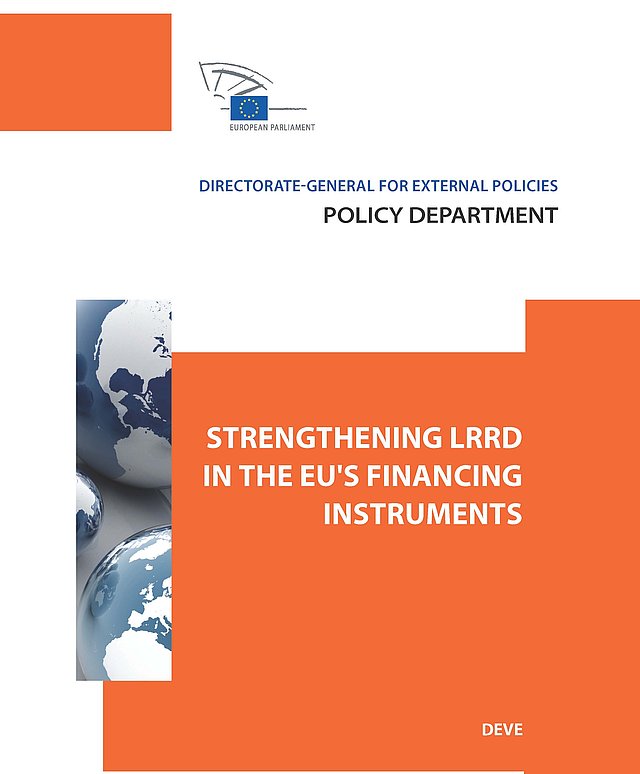
Strengthening LRRD in the EU's financing instruments
Linking Relief, Rehabilitation and Development (LRRD) tries to harmonize short-term relief and long-term development through effective political and financial coordinating mechanisms. Within the current EU legislative framework, LRRD is broadly considered in the Humanitarian Aid Instrument, whereas the Development Cooperation Instrument (DCI) is characterized by a less systematic commitment to LRRD. The Instrument for Stability was designed as a more flexible instrument that also opens up opportunities for LRRD but it is mainly security driven and has failed to convince practitioners of its LRRD value.
The analysis of the actual implementation of the European LRRD concept in different partner countries and crisis situations shows that, despite some progress made in recent years, the funding gap in the grey area between relief and development still exists and the coordination and enhancement of LRRD activities is far from being institutionalised. In the light of the 2014-2020 MFF and the new DCI, the study gives suggestions regarding the legal basis, financing options and general recommendations for the EU’s strategic framework on LRRD. Amongst others, additional resources are needed for LRRD, which should be seen as an approach rather than an option in geographical instruments and respective provisions should be made explicit in Country Strategy Papers.
Article number: 2012-30
Year of publication: 2012
Number of pages: 53 Pages
Authors: Dr. Pedro Morazán, Irene Knoke and others
Sie wollen spenden oder Mitglied werden?

SÜDWIND tritt seit über 30 Jahren für wirtschaftliche, soziale und ökologische Gerechtigkeit weltweit ein. Aus diesem Grund arbeiten wir zu einem breiten Spektrum von Nord-Süd-Themen mit dem Ziel, ungerechte Strukturen aufzudecken, öffentlich zu machen, Handlungsalternativen zu bieten und so zu Veränderungen beizutragen. SÜDWIND ist dabei inhaltlich und finanziell unabhängig. Um gemeinsam mehr zu erreichen, kooperieren wir mit Akteur*innen auf lokaler, europäischer und globaler Ebene, mit Gewerkschaften, Kirchen, Nichtregierungsorganisationen und Kampagnen. Wir forschen zu Themen wie Entwicklungszusammenarbeit, Frauen und Weltwirtschaft, Klimagerechtigkeit Nachhaltigkeit auf Finanzmärkten, zu Rohstoffen und Wertschöpfungsketten sowie zu Sozialstandards im Welthandel. In Deutschland verbinden wir unsere Recherchen mit entwicklungspolitischer Bildungs- und Öffentlichkeitsarbeit. Wir sind überzeugt: Dort, wo Menschen unter den Auswirkungen des globalen Wirtschaftssystems leiden, besteht ein direkter Zusammenhang zwischen dem Reichtum einiger weniger und der Armut vieler Menschen. Hierfür sind ungerechte wirtschaftliche und politische Strukturen verantwortlich und wir wollen dazu beitragen, diese zu ändern.
Unsere Partner*innen


